
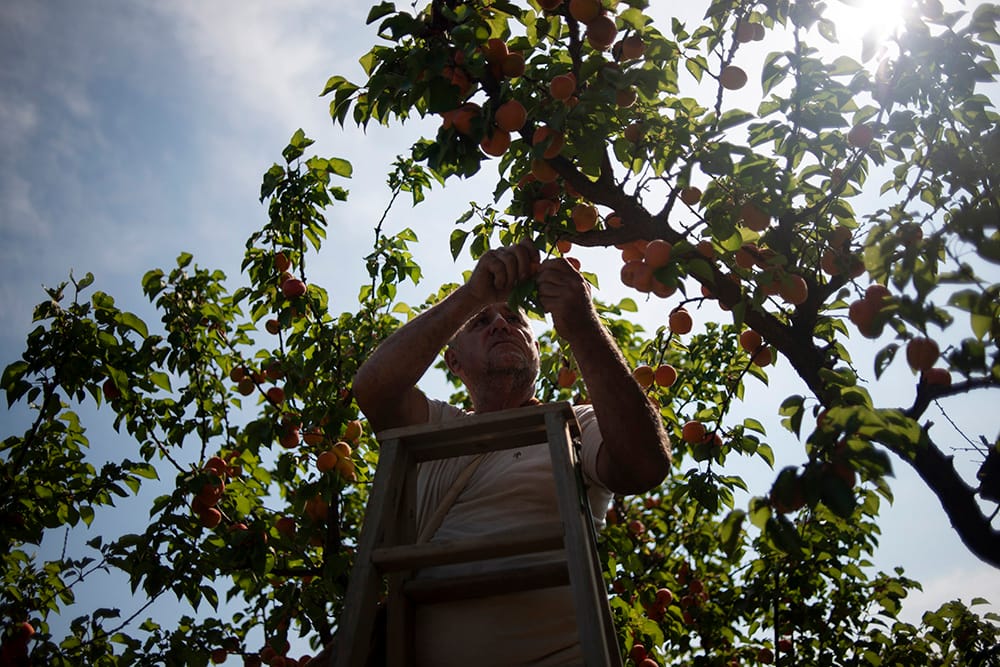

When you think of climate change, what images immediately spring to mind? Is it of communities having to abandon their homes because of coastal erosion, rising sea levels or desertification; or of farmers planting different crops because rising temperatures, uncertain rainfall and prolonged periods of drought have meant what they traditionally grow can no longer survive? Or maybe you think of fishing communities struggling to survive, as the fish they are dependent on change their roaming and migration patterns due to rising sea temperatures? Or maybe you think of starving polar bears and melting, crumbling ice sheets?
If I were a gambling man, I would say it was most likely the polar bears and melting ice sheets, at least if you live in the global North. These images might trigger an emotional response - a reaction that burns the image into our subconscious, but they have failed to generate meaningful action or engagement with the issue.
If they were an effective means of mobilising the public, initiating the necessary cultural shift away from passive consumerism towards active citizenship, and inspiring the political will to write legislation in support of changes necessary to avert catastrophe on a global scale, then we wouldn’t be in our current situation.
Instead they perpetuate a belief that climate change is distant, both in physical space and time, and that it’s seemingly intangible and abstract. This is exacerbated by the way it is reported in the news, largely focused on international political gatherings, celebrity engagement, or the latest scientific reports, sharing facts and figures and using language that make them hard to understand.
All too often the stories on climate change are framed around the underlying science, or the technology that contributes to the issue and that which will supposedly save us. This itself perpetuates the belief that science and human ingenuity will indeed save us, and distracts from the very real impacts that are being felt by communities and ecosystems across the globe right now. Even in coverage of extreme weather events, occurring with increasing frequency and intensity, all too often the underlying cause - climate change - is barely mentioned or discussed, if at all.
Climate change is a cultural issue, a public health issue, a women’s rights issue, a human rights issue, a legal issue, an economic issue, a political issue - to name but a few of the many dimensions to the unfolding climate crisis that can and must be explored.The voices and stories of those on the frontline of the crisis, and most affected by it - the islanders, the fishing communities, the farmers - must be heard and shared across the globe.
Back in 2007, US management consultant Gallup started running a poll in 127 countries to measure awareness and public opinion on the issue of global warming. In the countries of the global North there was a very high awareness - mostly above 90%, with the US and Australia - two of the most polluting nations per capita in terms of CO2 emissions, both coming out at 97% awareness.
Of those 97%, only 49% of those in the US and 54% of those in Australia thought that global warming was linked to human activity. In 2019, US university Yale conducted a similar poll, revealing that the percentage of those in the US who thought there was a link had increased to 55%. Twelve years of additional science and communication on the issue of climate change, and still 45% of the US population didn’t believe in anthropogenic climate change.
The survey also revealed that most Americans think global warming is a relatively distant threat – that they“ “are most likely to think that plant and animal species (71%) and/or future generations of people (69%) will be harmed a “moderate amount” or a “great deal” by global warming. About half or more also think the world’s poor (64%), people in developing countries (64%), people in the U.S. (59%), people in their community (48%), and/or their family (48%) will be harmed. Americans are least likely to think they themselves will be harmed (44%).Tthey are most likely to think that it will harm future generations of people (71%), plant and animal species (71%), the Earth (70%), people in developing countries (62%), or the world’s poor (62%). They are less likely to think it will harm people in the U.S. (58%), their own grandchildren (56%) or children (50%), people in their community (48%), their family (47%), themselves (43%), or members of their extended family living outside the U.S. (41%).”
Currently the affects of climate change are disproportionately impacting poorer communities across the globe, andthe global North is contributing disproportionately to the situation. But we live in a globalised, interdependent world and so nobody can insulate themselves from what lies ahead — we are inescapably all in this together.
There are so many human-centric stories to be to told in countries like the United States, Australia and the U.K, of people and communities impacted by climate change, and by sharing these stories, perhaps we can achieve what was intended by sharing pictures of starving polar bears and melting ice sheets.The issue of climate change must be brought to everyone’s doorstep. It’s already here but most people just don’t realise it yet.
Originally published in Where the Leaves Fall magazine in December 2021