
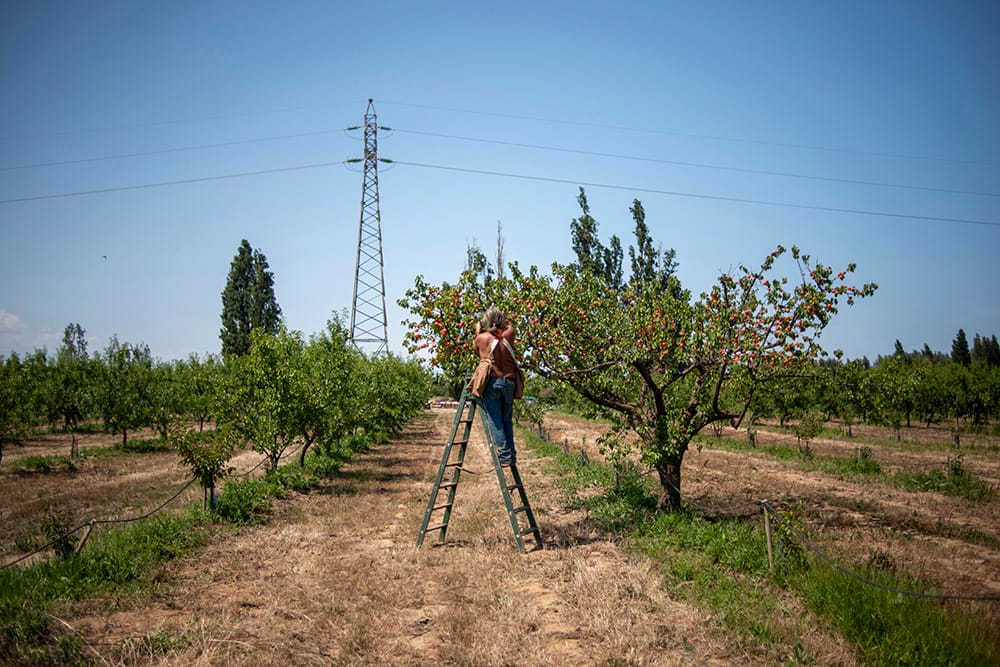

The continual degrading of Europe’s soils is causing desertification to creep across the continent. What this means for future food supplies and the survival of affected communities and ecosystems is dependent on the ability to restore and regenerate the soils. Can the EU push back against the sands of time, or will it experience its own Dust Bowl?
The sky darkens as the sun is obscured by a tsunami of dust. It’s 1932, in the Great Plains of the United States, and over the two years that follow, 52 of these ‘black blizzards’ are recorded. They envelope swaths of the country, carrying with it the dead, sterile remnants of an area once treasured for its dark, fertile soils, creating what would become known as the Dust Bowl. On the 27th April 1935, in response to what had unfolded, President Franklin D. Roosevelt signed the Soil Conservation Act. He would later go on to warn that ‘The nation that destroys its soils destroys itself.’
The destruction of the soils of the kind that resulted in the Dust Bowl is an example of desertification in action. When hearing this word, you might imagine the expansion of naturally occurring deserts like the Sahara, as its sands forever shift and creep outwards - gradually consuming all that lies before it. The Sahara is indeed expanding –10% since 1920– thanks in part to climate change and human-induced desertification of the peripheral land, the impact of which has been devastating to those communities dependent on it. But desertification is occurring well beyond the periphery of natural deserts.
According to theUnited Nations Convention to Combat Desertification (UNCCCD), established in 1994, it is defined as:
“Land degradation in arid, semi-arid and dry sub-humid areas resulting from various factors, including climatic variations and human activities.”
Exact definitions vary in terms of the processes and conditions they include, but essentially human-induced desertification involves the gradual destruction and loss of once fertile, productive soil, which itself is the consequence of a disrupted water cycle. Whenever you observe a farmer practicing conventional methods of planting and harvesting, you will see them ploughing up the land – exposing fresh topsoil to the elements. The complete lack of cover causes the exposed topsoil to be dried out by the winds and the sun, and as it does so, any rain that falls on the hardened, dried earth isn’t able to infiltrate properly, causing runoff to occur and taking fertile topsoil with it. Every time the farmer ploughs, leaving the soils bare and exposed, the sun, wind and rain continue to take their toll and the water cycle is disrupted further.
As Allan Savory, founder of theSavory Institute, which facilitates large-scale regeneration of the world’s grasslands through the practice of ‘holistic management’, explains in his book ‘The Grazing Revolution: A Radical Plan to Save the Earth’: ‘Soil’s water-holding capacity is cumulative. Effective rainfall, which by definition remains in the soil, accumulates each year, with ever-increasing water flowing through the soil to rivers, wetlands, and aquifers. Excessively exposed soil becomes more drought-prone year after year, land with covered soil becomes increasingly drought-resilient.’
The 1935 Soil Conversation Act is testament to the fact that a general awareness and understanding of the need to protect the Earth’s soils has been around for quite some time. Yet desertification is an ever-growing concern across the globe – affectingover 1.5 billion peopleinover 100 countries- and the largely temperate, fertile continent of Europe is not immune. While the Mediterranean region is particularly vulnerable, the issue is not limited to the likes of Spain and Greece – two of the obvious victims, but at present is affecting13 EU nations and 8% of the territory.
Over 75% of the Earth's land area is already degraded to some degree, which could rise to over 90% by 2050 with current trends. The profound impact this will have on societies and all life on Earth cannot be ignored. The prevailing narrative in industrialised societies has espoused the belief that communities can survive and thrive regardless of their relationship with Nature. All the while, the consequences of maintaining such a belief have been exacting a profound toll on the environment and biodiversity, and in some cases have gone as far as eroding the foundations of societies.
Desertification, like climate change, exacerbates many social issues – not only leading to food insecurity, water insecurity, and increased poverty, but also contributing to issues such as increasedfarmer suicides, increaseddomestic violenceand increased conflict, as people whose very lives and livelihoods depend on the land compete for ever more scarce resources. Ultimately, in many parts of the world it has led to increased migration, as communities die out and the sterile soils are abandoned, and people move to cities or emigrate.
Take Mexico as an example, where according to the UN’s Food and Agricultural Organisation (FAO), around 700,000 to 900,000 people migrate from degrading drylands each year – an important contributing factor inrural-urban migration, as well as Mexico-U.S. migration streams. Studies by the Institute for Environment and Human Security at the UN University in countries including Egypt, Morocco, Niger, Mali and Burkina Faso, indicate that “land degradation and desertification contribute to human mobility, and worsening living conditions for both those who leave and those who remain behind.”
Europe may not be experiencing these consequences to the same profound and disruptive extent as other parts of the world, but it’s following a similar trajectory. The European Environment Agency (EEA) carried out a study in southern, central and eastern Europe in 2008, then again in 2017, revealing that the amount of land with a high or very-high sensitivity to desertification had increased by an area equivalent in size toSlovakia and Greececombined.
Rather than inspiring action, in its2018 Special Reportentitled ‘Combating desertification in the EU: a growing threat in need of more action’, the European Court of Auditors pointed out that despite the fact that in 2015 the EU and Member States had committed to achieving ‘land degradation neutrality’ by 2030: ‘There has been no coordination between the Member States, and the Commission has not provided practical guidance on this topic. There is not yet a clear, shared vision in the EU about how land degradation neutrality will be achieved by 2030.’
The report lays bare the apparent lack of appreciation amongst governments for the need to protect Europe’s soils, highlighting the fact that in April 2014 the Commission withdrew a proposal for a Soil Framework Directive (SFD), which ‘required Member States to identify areas at risk of degradation, define targets for soil protection, and carry out programs to achieve these targets.’ The SFD also intended to contribute to ‘halting desertification resulting from degradation and soil biodiversity loss.’ The reason for the proposal being withdrawn was because in the 8 years since it had been drawn up, there was ‘no qualified majority in the Council in favour of adopting it.’
The Commission began a public consultation in February 2021 on the topic of healthy soils to inform the EU’s soil strategy. There are also new initiatives such as the European Climate Pact and the European Green Deal that communicate a need and intention to act on soil health, but it is as yet unclear whether this is more greenwashing or a genuine engagement with the issue that will lead to meaningful change and impact.
Thanks to the globalised nature of trade, the consequences of land degradation within the EU has ramifications beyond the bloc’s borders. Less land to produce the food necessary to feed itsgrowing populationwithin its own borders, means a greater reliance on land in other countries to compensate. In 2016 the EU occupied arable land overseas equivalent in size toFrance and Italy combinedin order to fulfil demand. In 2008 it was around athird of that. With increased desertification will come an ever-increasing dependency on land and soil beyond the EU’s borders, and in the absence of any policies protecting the needs of the local populations and markets of the exporting countries, this will have an impact on the food security, water security and human rights of people within those countries, as they compete for access to land and the means to fulfil their basic needs.
The reason to act doesn’t stop there. In the age of the Anthropocene, what makes the preservation and restoration of the Earth’s soils even more critical to humanity’s survival and that of the biodiversity that remains, is that the process of desertification creates a negative feedback loop. As soil degrades it doesn’t just become less effective at sequestering carbon, it starts releasing stored carbon into the atmosphere, thereby contributing to climate change, which catalyses further soil degradation.
The longer our societies function as if soil degradation and disrupted water cycles aren’t a priority, the more devastating the outcome. But just as we have the knowledge of what has happened to past civilisations that overexploited their soils, so too do we possess an understanding of what needs to be done to address it. As David Montgomery, Professor of Earth and Space Sciences at the University of Washington in the United States, declares in his book ‘Growing Revolution: Bringing Our Soils Back to Life’: ‘while the problem of soil degradation remains the least recognised of the pressing crises humanity faces, it is also one of the most solvable.’ We have all the knowledge, skills and tools we need to restore and regenerate heavily degraded soils. Just three years after the Soil Conservation Act was signed, soil erosion within the US had dropped by65 percent- offering proof that the effects of poor soil and water management could be reversed in a surprisingly short period of time.
This has been shown to great effect more recently in initiatives across the globe – such asTarun Bharat Sangh, in India which has built or restored over 12,000 bodies of water, and restored 9 rivers, which had been dry for many years. Within the EU there is the work of hydrologist, Michal Kravcík in Slovakia, where he has helped dozens of villages through the development of a ‘water management policy that utilises numerous small reservoirs and depressions to catch and store water, takes necessary measures to slow runoff and restore wetlands, and transfers control of water resources from central government to local self-government.’ There are also an incredible number of smaller initiatives, such as Tamera in Southern Portugal, a community of around 200 people who have restored their local ecosystem, reversing the impacts of desertification through improved water retention; and AlVelAl in southern Spain which, having successfully restored its own land, is promotingin the local area the restoration of degraded farmland using regenerative farming practices.
When asked about how receptive the farmers he engages are to practices that challenge conventional approaches, Miguel Gomez, co-founder of AlVelAl, confirms that many of the practices that have been used to good effect in helping regenerate the land, such as green manure and plant cover, are not new. They were considered conventional to his grandfather’s generation 30 or 50 years ago, but were then discarded by his father’s generation who instead embraced chemical fertilisers and pesticides, along with mechanisation, as they were easier to manage. This gives him hope that more and more people can be convinced of the efficacy and benefits of farming practices that restore and regenerate the soils.
Bernd Müller, former director of the Global Ecological Institute at Tamera in southern Portugal, where for the past decade the focus of research has been on effective rainwater retention measures, further argues that countering the rise in desertification goes beyond ecological considerations and is ultimately rooted in industrialised society's relationship with Nature. He says, 'I think it is also about systemic change in thinking, when we start thinking in natural water cycles. Because we got very much used to working in artificial water cycles, but when we start talking about ecological restoration, it is about understanding natural water cycles. And the natural water cycles are very vivid, very complex cycles which are not based on competition and exploitation. Monoculture cannot be part of it – you can't try to integrate them in the transition. Ecological restoration is about building soil. And the question would be: how can we most efficiently build the soil that was eroded worldwide in the last hundreds of years? Water is life, water provides living conditions. Restoring climate cycles without restoring water cycles is just impossible. Because climate cycles are mainly water cycles.'
This runs counter to the central tenet of industrialised societies - that through shear human brilliance we can decouple our societies from any dependency on Nature, and indeed bend it to our will. We don’t have to go far back in time though, just a few generations, prior to the industrialisation of agriculture, when in those same societies a greater respect and appreciation existed within those who worked the land of a dependency on healthy, fertile soil, and a need to therefore preserve it. As Montgomery points out: ‘The darker the soil the more organic matter – and carbon – it contains. Several generations ago, the amount of organic matter in the soil set the price of agricultural land. Every farmer knew that soil rich in organic matter was more fertile. So did the bankers.’
The industrial agricultural system is at the heart of human-caused desertification, as well as climate change, biodiversity loss, water pollution and other critical issues of our time. The companies pulling the strings of the system have a vested interest in maintaining the status quo, as regenerative agriculture uses less fertiliser, for example, while soil degradation increases dependency on it. Müller believes a connection with Nature cannot be integrated into the current system, that it would be ‘a contradiction to the system – it doesn’t want this feeling, this connection – it’s an exploitative system.’
Water and its effective management are central to the regenerative practices necessary to avoid and reverse desertification. Müller believes this restorative process is about seeing ‘the potential of the land, and helping it develop that potential again, and one ecosystem function would be that it is water retentive - that we manage to keep all rainwater on the land in order to restore soils and restore vegetation cover.’
Conventional farming practices are not just degrading the soils and disrupting the water cycle, but undermining the sustainability and resilience of communities and society at large. Unless there’s some sort of external force applied – an effective intervention to address poor water and soil management, such as a modern-day equivalent to the Soil Conservation Act, the process of desertification will gradually consume more and more of what little productive land still exists within Europe, bringing with it all the social and environmental ills that follow in its wake.
Montgomery points out that: ‘people can build up soil organic matter, and thus soil fertility, far faster than nature makes soil. But our agricultural policies hold us back, discouraging farmers from using the tools beneath their feet.’ Desertification is ultimately a symptom of a broken agricultural system, and more broadly in industrialised societies, a broken relationship with the world around us, and a lack of political will to change the dynamics of power.
Water is life and soil is what nurtures it – something many of us have somehow forgotten. Our willingness to buy into the industrialised systems because of the short-term convenience they offer has blinded us to the fragile, decaying foundations upon which they are built. Whether it’s a centralised, privatised water network that relies on the neglect of the natural water systems, or an agricultural system dependent on the over-exploitation and destruction of the very soils upon which we depend, the cost of this wilful blindness is exacting a heavy price on the environment and our communities – whether we acknowledge it or not.
Our culture must change – from the ground up.
First published in Issue 3 of Icarus Complex Magazine in Autumn 2021.