


The responsibility we have for the waste we produce in our homes goes beyond separating it and throwing it in bins for collection, and it’s time we recognised that.
I recently started documenting the environmental boundaries between the natural and the industrial — a project I’ve called Industrial Borderlands. I started off by walking up and down the Lee Navigation — a canalised river that runs from Hertford Castle Weir to the River Thames at Bow Creek, part of which marks the eastern border of Haringey.
When you start exploring the periphery of an urban space, the tapestry of manmade systems attempting to impose order on us — and on the environment — starts to fray. It’s here you really begin to witness the fallibility of those systems, especially when it comes to waste management, and the consequences of having to sustain an ever-increasing urbanised population. Because of the disruptive nature of the waste we produce, such as plastic products that can take hundreds of years to decompose, failing to capture waste originating from households, public spaces or industry allows it to leach out into the surrounding areas, affecting the natural environment.
This is in stark contrast to Mother Nature, where there is no such thing as waste. It is a closed-loop system within which every element, at every stage of its existence — dead or alive, animate or inanimate — has a constructive role to play. A system of such complexity it’s unlikely we will ever know the extent to which its myriad, intricate layers are interconnected. From subterranean mycelial networks that connect and protect trees to the positive role of keystone plant and animal species in biodiversity — and, of course the seemingly infinite array of factors influencing climate — new discoveries are constantly being made that highlight just how little we know, just how astonishingly complex nature’s systems are, and the benefits of respecting and working with nature in harmony.
Beyond the waste we generate ourselves, we town and city dwellers aren’t generally exposed to the waste created by our systems — whether at the point of production or post-consumption. Nor do we see the consequences of the excessive amounts of waste we produce individually and collectively. Beyond what we scrape into the compost bin every day, we don’t witness one third of the food we produce globally going to waste. When we choose which apples or bread to buy, we aren’t aware of the incredible loss of aquatic life or collapse of bee colonies resulting from the chemical pesticides and fertilisers used to grow our food. For decades we have been buying and discarding things without a care in the world about the impact this has on other people, animals or the environment.
Whether it’s the clothes we wear or the food we eat, as a culture we haven’t only become disconnected from how the things we buy are produced, we treat them and any packaging they come wrapped in as disposable — acting as if we have access to infinite resources and disregarding the impact of any waste produced. With plastic alone this attitude, combined with the flaws in our waste management systems, results in 12 million tonnes entering the oceans every year. Only 9% of all the plastic ever produced has been recycled.
With top scientists declaring we have only 12 years to avert a climate crisis that will change the face of humanity and the Earth, we must strive not only for a radical change in how our systems function but also a radical shift in our culture, and our relationship with what we buy and our waste.
What does this radical change look like?
Well, it’s actually not so radical and involves using a pre-existing concept, the waste hierarchy — promoted by the EU and UK government as a means of ranking waste management options ‘according to what is best for the environment’. Instead of paying lip service to it, we need to actually apply it.
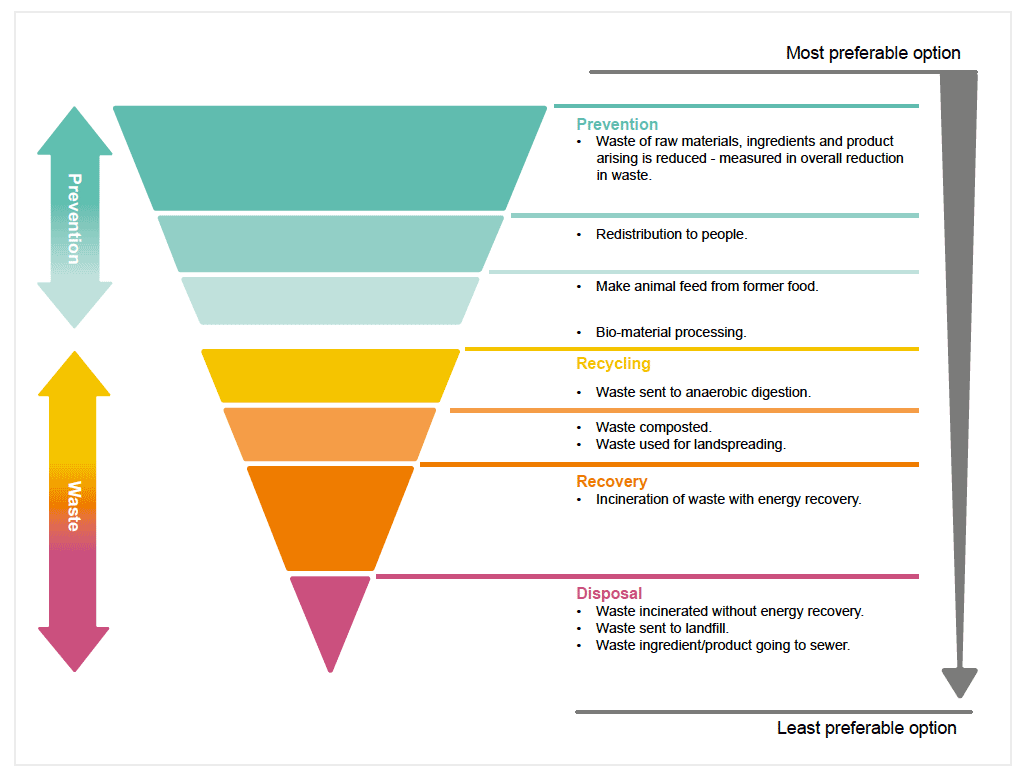
If applied properly — giving top priority to preventing waste in the first place — adhering to the waste hierarchy would reduce the amount of material circulating in the waste management system and consequently the quantity of material being processed, sent to landfill or ending up in the oceans.
However, rather than legislating to promote ‘prevention’ which, by the government’s own admission, is the best thing for the environment, local and national government has instead chosen to focus on one level up from the bottom — ’other recovery’ — diverting waste away from landfill and nurturing an industry based on energy recovery from both incineration and anaerobic digestion.
For example, the North London Waste Authority (NLWA) — the organisation tasked with managing the majority of waste in Haringey and across six other north London boroughs — sends any waste considered ‘unsuitable for other methods of recycling’ to the LondonEnergy facility, situated just above the North Circular on the banks of the Lee Navigation. Wholly owned by NLWA, waste is incinerated here to produce electricity. Work has actually begun to replace this facility with a new one and expand the services provided.
As for the top of the waste hierarchy, in 2017–2018 the NLWA saw a reduction in waste of just 0.59% on the previous year. While the amount of household waste reused, recycled or composted remained at 32% and the amount sent to landfill actually went up from 8% to 11%.
This government-sponsored commoditisation of waste, through energy recovery or any other circular economic activity, disincentivises the reduction of waste — ultimately undermining the waste hierarchy, the very thing the government is (in theory) promoting.
So, what can we citizens do to help reduce waste?
The prevention of waste cannot be achieved simply by consumers buying and throwing away less stuff, although certainly we all should be doing this. With 311 million tonnes of plastics produced globally in 2014, and that amount expected to double again in the next 15 years, it must also involve corporations being more responsible with their production practices and the materials they use, aiming to minimise the impact of any waste resulting from their products.
While most corporations are not going to do this voluntarily, the recent legislation to ban plastic straws is an example of how public opinion can influence politicians — especially during such a dynamic and unstable period in British politics, when the government and politicians alike are striving for positive PR opportunities. As such, the straw legislation was an easy win but is also a drop in the ocean. It must only represent the start of a collective call for much more meaningful legislation that introduces incentives (or disincentives) to enforce the waste hierarchy across all sectors of society.
When it comes to the issue of waste management, technology and a circular economic approach alone do not offer a sustainable long-term solution. We must focus on consuming less, and also take inspiration from nature by adopting production practices and making goods that don’t disrupt or destroy the world around us. We need to start designing waste out of our systems.
—
Originally published in June 2019 in Village Raw magazine